




Ozone is a quietly hazardous gas in industrial and commercial environments. Unlike hydrogen sulfide, which has a strong odor, or carbon monoxide, widely known as a serious threat, ozone occupies a middle ground that makes it easy to underestimate. It has a faint, distinctive smell that workers often associate with “fresh air,” and its effects can develop gradually rather than causing an immediate, obvious response.
For facilities that generate or work around ozone, intentionally or as a byproduct, the subtle odor and delayed symptoms make dedicated ozone sensor monitoring essential. Standard gas detection equipment won’t detect it, and without the right instrument, you won’t know workers’ actual exposure levels.
What Is Ozone and Why Does It Matter in the Workplace?
Ozone (O₃) is a molecule made up of three oxygen atoms. In the upper atmosphere, it plays a protective role. At ground level, it irritates the respiratory system, and occupational exposure limits apply in most industrial jurisdictions.
In workplaces, ozone shows up in two ways. The first is intentional: facilities actively generate ozone for water and wastewater disinfection, odor control, air and surface sterilization, and food processing applications. The second is incidental: ozone forms as a byproduct of UV systems, electrostatic air purifiers, some welding processes, and even high-volume laser printers and copiers in poorly ventilated office or commercial spaces.
The core hazard is that ozone affects the respiratory system, causing throat irritation, coughing, chest tightness, and reduced lung function. These effects can occur at concentrations that do not seem obviously dangerous at the time. Workers may not connect end-of-shift symptoms to ozone exposure without monitoring data showing daytime conditions.
Major jurisdictions set occupational exposure limits for ozone, including OSHA, ACGIH, and Health Canada, and these limits vary by work intensity and duration. Verify these limits against current regulatory guidance for your jurisdiction before designing a monitoring program, since standards can change.
Why Ozone Needs Its Own Sensor
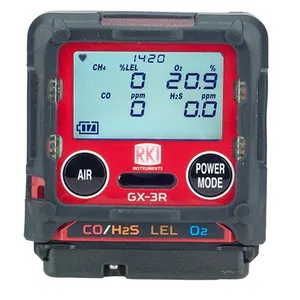
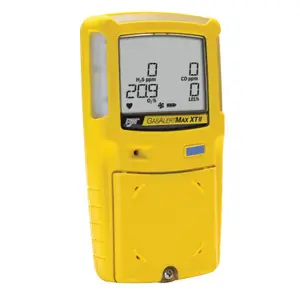
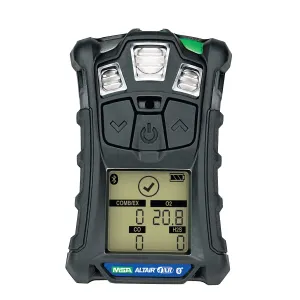
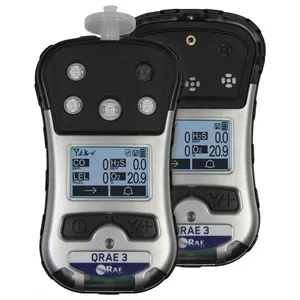
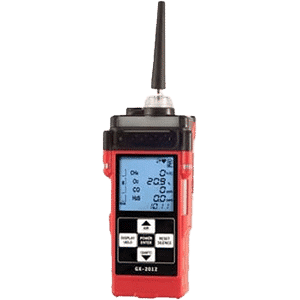
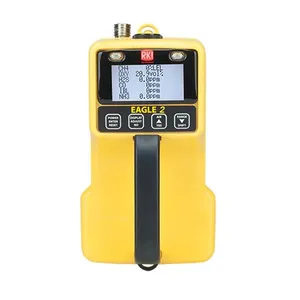
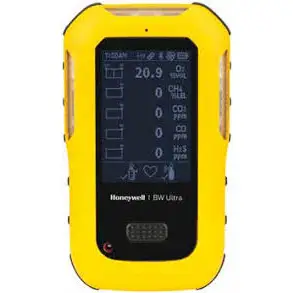
Standard multi-gas detectors, the kind most industrial workers carry for LEL, O₂, CO, and H₂S monitoring, do not measure ozone. This is not a limitation of brand or model. Ozone requires a different sensing technology and a sensor specifically configured for it.
There are two practical reasons for this. First, ozone is measured in very low concentration ranges, parts per million or even parts-per-billion range, for ambient workplace monitoring. Occupational exposure limits are well below the ranges standard gas detection is typically calibrated for. Second, ozone’s chemical properties cause it to react differently with sensing materials than the gases covered by conventional multi-gas instruments.
This is why the concentration range of the ozone sensor you choose matters. A sensor sized for ambient workplace monitoring operates across a low range, typically 0–0.15 ppm, providing the resolution needed to detect exposure levels relative to occupational limits. A facility monitoring an active ozone generator to confirm it operates within process parameters needs a higher-range sensor (0–10 ppm) that can measure concentrations well above ambient levels without saturating.
Getting the range wrong means either losing resolution at the concentrations you need to monitor or selecting a sensor that can’t measure the levels your process actually generates.
How Ozone Sensors Work
The ozone sensors Concept Controls carries use Gas Sensitive Semiconductor (GSS) technology. The operating principle is straightforward: the sensing material’s electrical resistance changes upon contact with ozone, and the instrument measures this change to determine the gas concentration.
GSS technology is well-suited for low-range ozone monitoring because it detects concentrations at occupationally relevant levels and responds quickly to environmental changes.
One technical characteristic worth understanding is cross-sensitivity. Ozone sensors using semiconductor technology can respond to other reactive gases, including some VOCs, which can influence readings in environments with multiple contaminants.
This is not a reason to avoid the technology but a reason to consider your facility’s specific atmospheric conditions when interpreting data and selecting sensor or monitor locations. A qualified industrial hygienist or equipment specialist can help assess this in your specific process environment.
Where Ozone Monitoring Is Used
Ozone monitoring applies to more facilities than many safety managers expect. Some common applications:
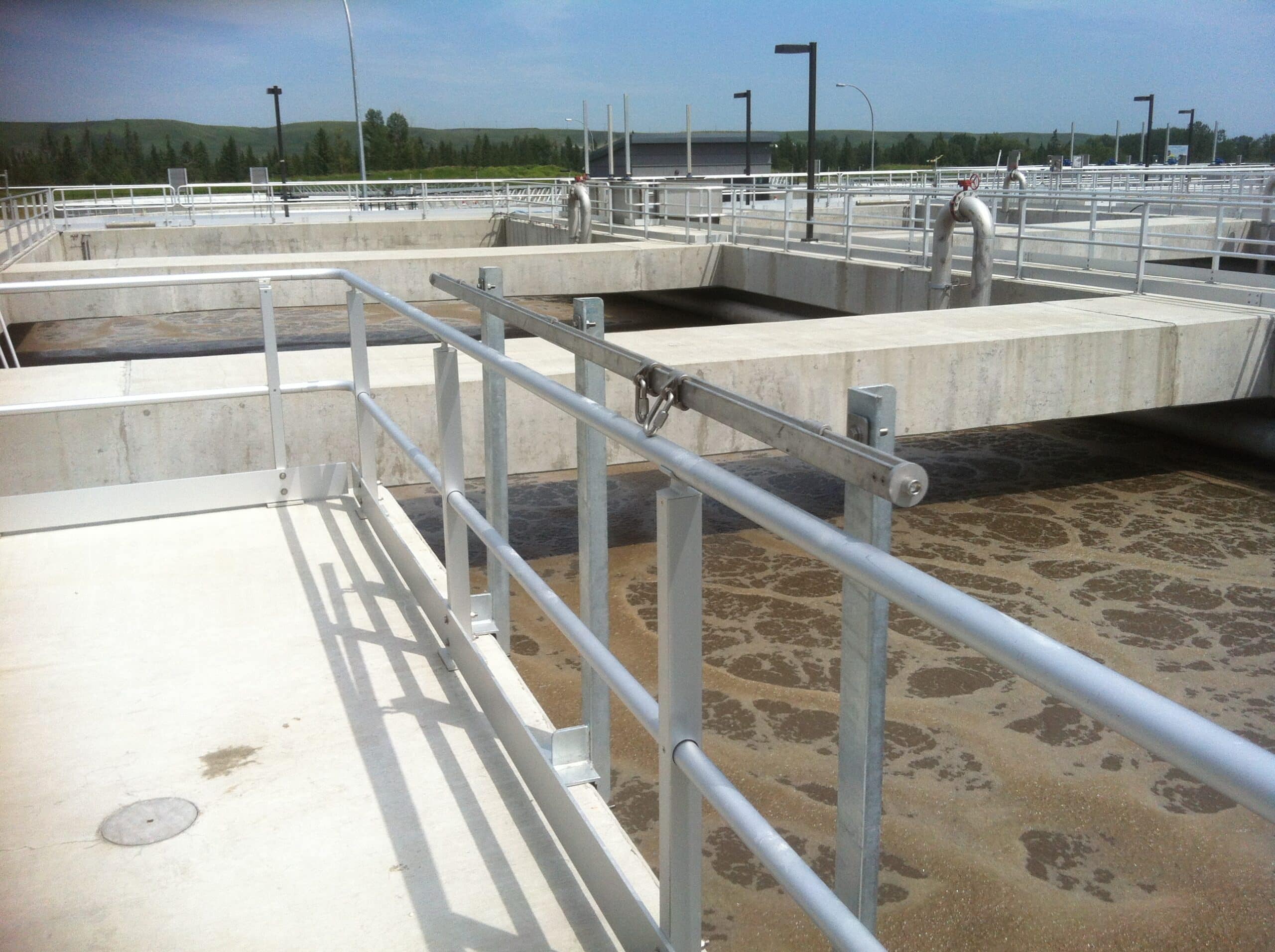
- Water and wastewater treatment: Ozonation is a standard disinfection method in treatment plants. Workers in areas where ozone is injected or off-gassed need to be monitored to confirm that exposure remains within safe limits during normal operations and maintenance.
- Odor control systems: Industrial and municipal facilities that use ozone generators to neutralize odors (e.g., food processing, waste management, animal facilities) expose workers to ozone in the areas around the equipment.
- Commercial and institutional buildings: High-volume printing environments, copy centers, and offices with heavy use of laser printers or copiers can accumulate ozone in poorly ventilated spaces. Indoor air quality monitoring is increasingly relevant as building managers take IAQ more seriously.
- Welding and UV processing: Certain welding processes and UV curing systems produce ozone as a byproduct. Monitoring in these areas confirms whether ventilation controls are performing as expected.
- Electronics and semiconductor manufacturing: UV and plasma-based processes used in semiconductor fabrication can generate ozone, making it a relevant monitoring parameter in cleanrooms and process areas.
If your facility operates any of these processes or uses equipment that generates ozone intentionally or as a byproduct, ozone monitoring should be part of your environmental monitoring program.
Choosing the Right Ozone Monitoring Setup
The right configuration depends on two key questions: what concentration range you need to monitor, and whether you need continuous fixed monitoring or portable spot-check capability.
Sensor range selection
- 0–0.15 ppm range: For ambient workplace exposure monitoring. This range provides the resolution needed to track worker exposure relative to occupational limits. It is the right choice when the goal is protecting workers from inadvertent ozone exposure in their breathing zone.
- 0–10 ppm range: For monitoring ozone-generation equipment or verifying process control. Use this when you need to confirm that equipment is generating ozone within intended parameters, or when process concentrations exceed ambient occupational monitoring ranges.
Concept Controls offers Aeroqual ozone sensor heads in both ranges, compatible with Aeroqual’s portable and fixed monitoring platforms.
Fixed vs. portable monitoring
Fixed monitors provide continuous data from a defined location. They are the right approach for areas where ozone generation is ongoing or where workers are regularly present, and exposure is cumulative.
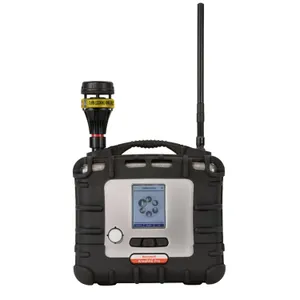
Concept Controls carries the Aeroqual Series 900 Fixed IAQ Monitor and the AQM 65 Ambient Air Monitoring Station for these applications. Both are compatible with Aeroqual ozone sensor heads and provide continuous monitoring with data logging.
Portable sensor heads are well-suited for investigation and survey work — confirming ozone concentrations in a specific area after a complaint, verifying that ventilation controls are working effectively, or conducting a baseline survey before designing a fixed monitoring installation.
For most facilities with an active ozone-generating process, the practical approach is a combination. Use fixed monitors in the primary exposure zones and a portable option for follow-up investigation when readings indicate elevated concentrations.
Frequently Asked Questions
Can a regular gas detector measure ozone?
Standard multi-gas detectors configured for LEL, O₂, CO, and H₂S do not measure ozone. Ozone requires a dedicated sensor with technology specific to O₃ detection. If ozone is present in your facility, whether generated intentionally or as a process byproduct, a purpose-built ozone sensor is the only reliable way to monitor it.
What’s a safe ozone level in the workplace?
Occupational exposure limits for ozone vary by jurisdiction and are set by bodies including OSHA, ACGIH, and Health Canada. Verify these limits against current guidance for your location before designing a monitoring program, as standards can be updated. Your industrial hygienist or safety officer can help determine which limits apply to your specific work context.
Do I need a portable or fixed ozone sensor?
It depends on your application. Fixed monitors are suitable for continuous monitoring in areas where ozone is regularly present, such as process areas, treatment plant zones, and printing rooms. Portable sensor heads are better suited for investigative work, baseline surveys, and periodic spot checks. Many facilities with ongoing ozone generation benefit from both.
Explore Our Safety Solutions
At Concept Controls, our specialists can help you assess your environment and match the right device to your needs. Contact us today. We are happy to answer questions, compare products, or arrange a demo.